The call came in on a rental property in Scottsdale — two slow drains in the same guest bathroom, reported by the tenant. The standup shower had been draining poorly, and the bathroom sink wasn't much better. Matt cleared both at the first visit, no parts needed. Here's what he found in each one.
Standup Shower: Corroded Interior Strainer Packed with Hair and Soap Scum
The shower had a square brushed-gold drain plate — clean-looking from above, nothing obviously wrong. But slow drains in a standup shower almost always come back to the same two places: the drain plate itself, or the interior strainer basket that sits below it inside the drain body.
Matt lifted the drain plate and found a corroded interior strainer loaded with compacted hair and soap scum buildup. The strainer basket is a secondary screen that sits inside the drain collar, below the visible cover — most homeowners don't know it's there. This one had been in place long enough to corrode and accumulate enough debris that water couldn't move through it at a useful rate.
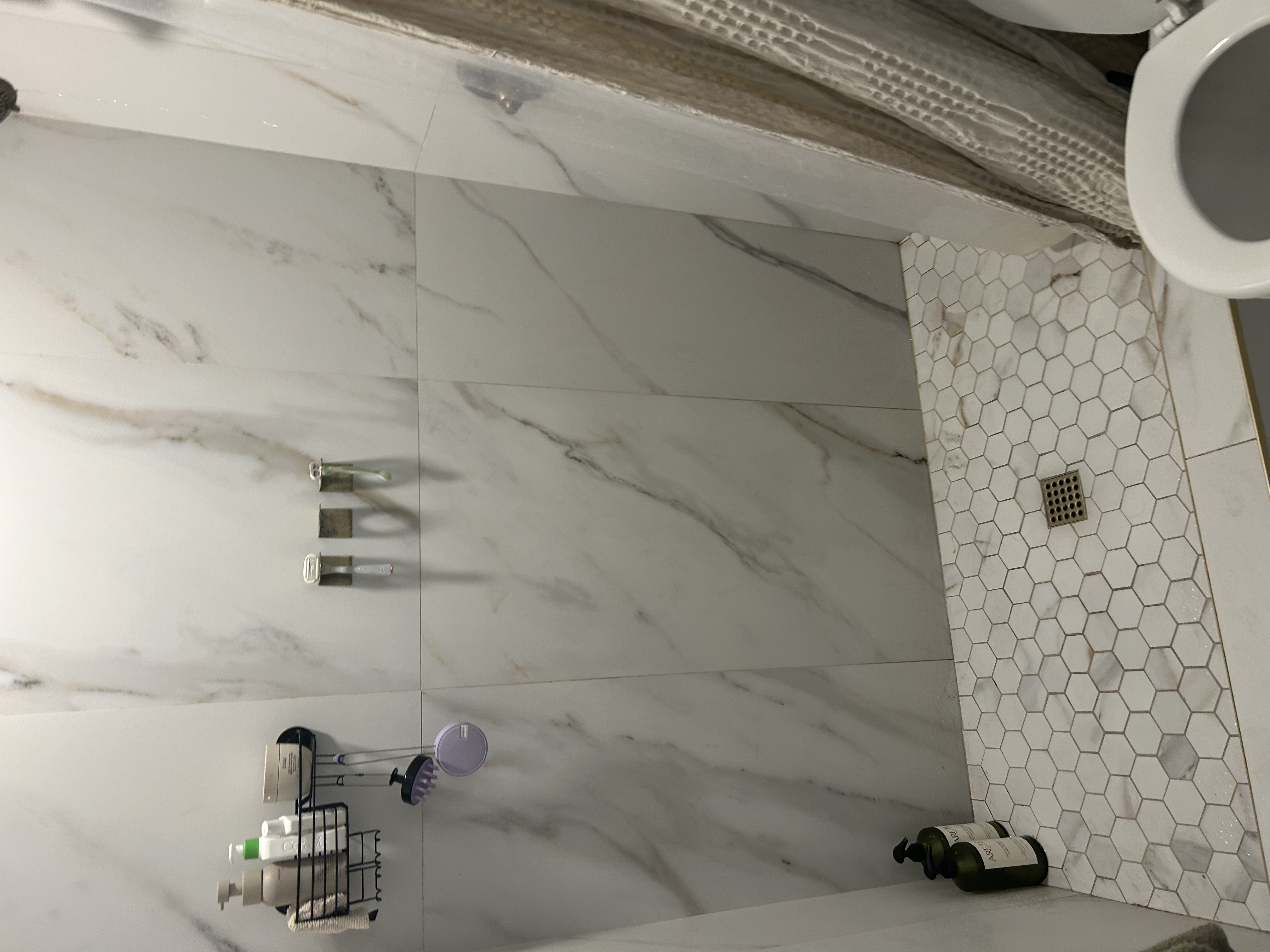
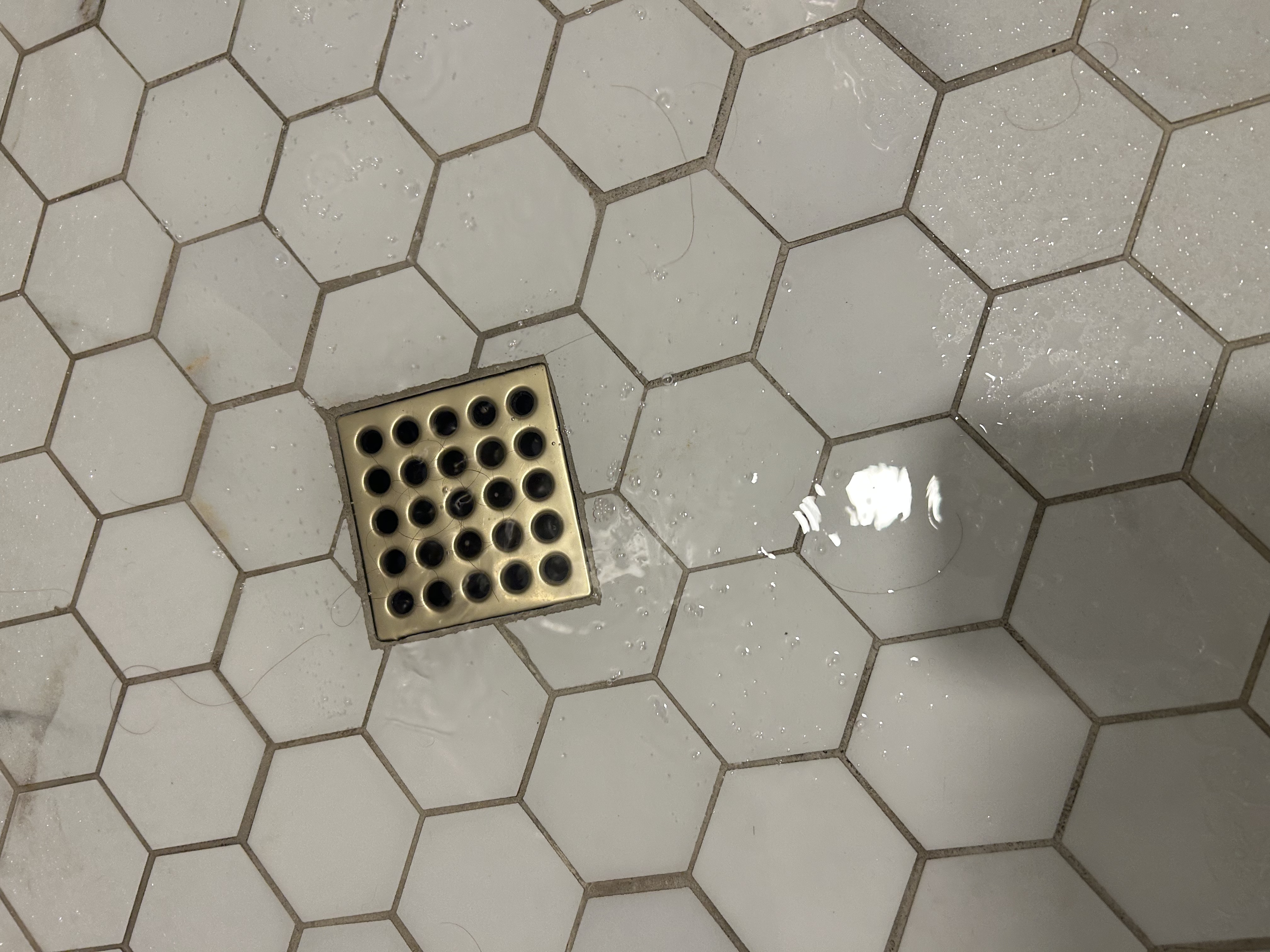
The shower drain before service — brushed-gold drain plate on hexagonal tile, clean-looking from above. The problem was the corroded strainer basket sitting underneath it.
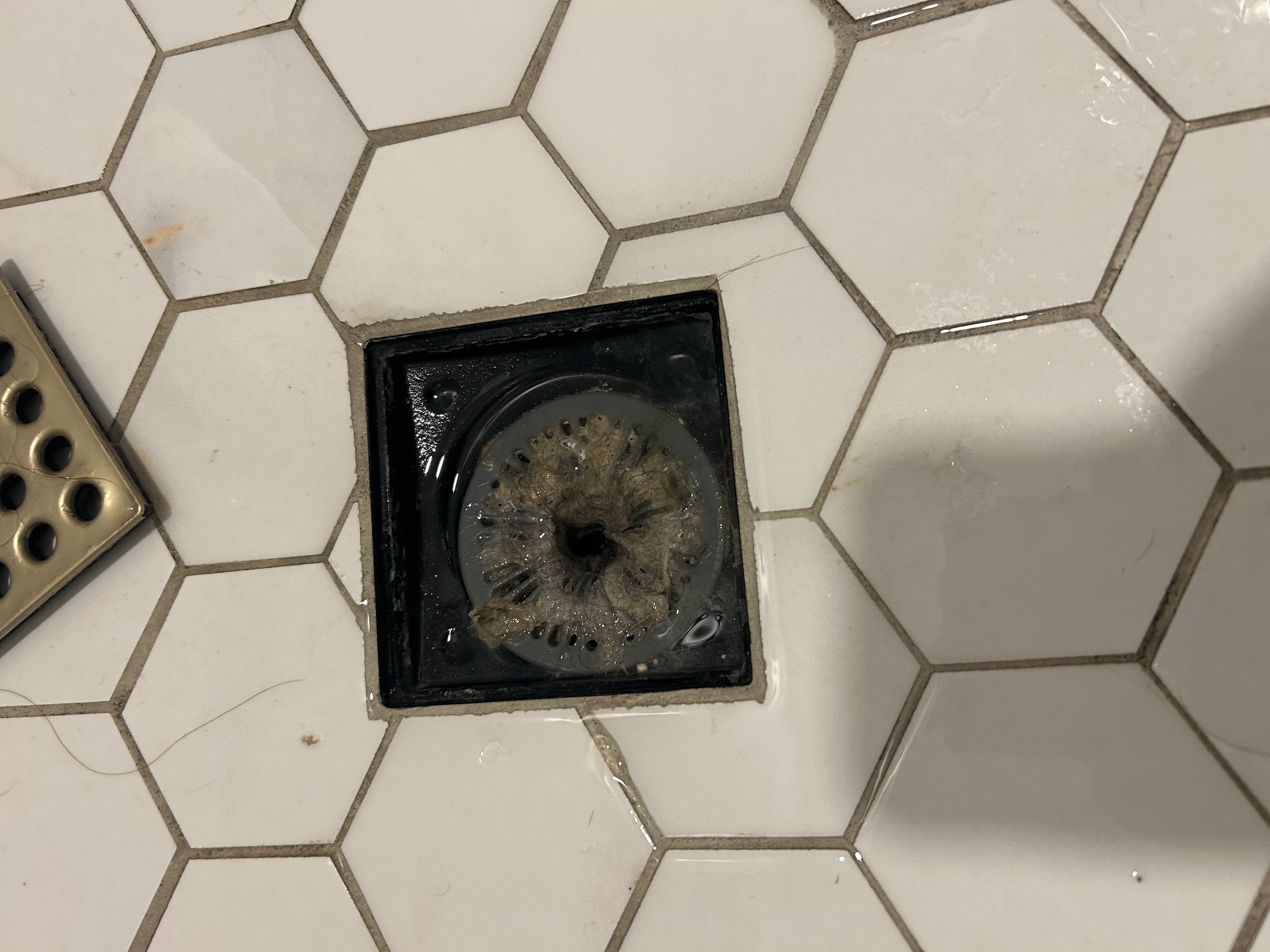
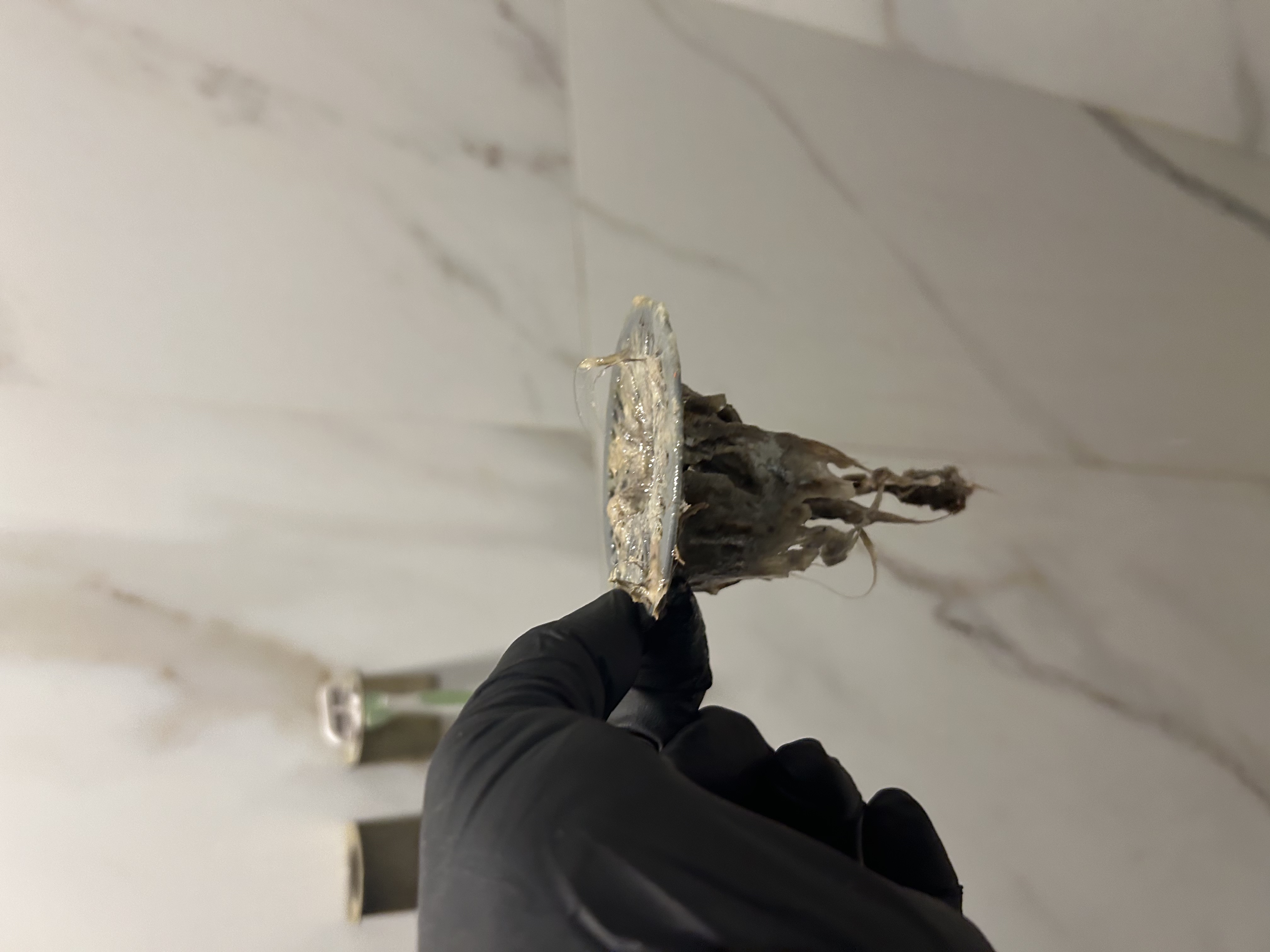
Left: the interior strainer basket after removal — corrosion throughout, matted with hair and soap scum. Right: the strainer held after removal — years of accumulation in a component most people don't know exists.
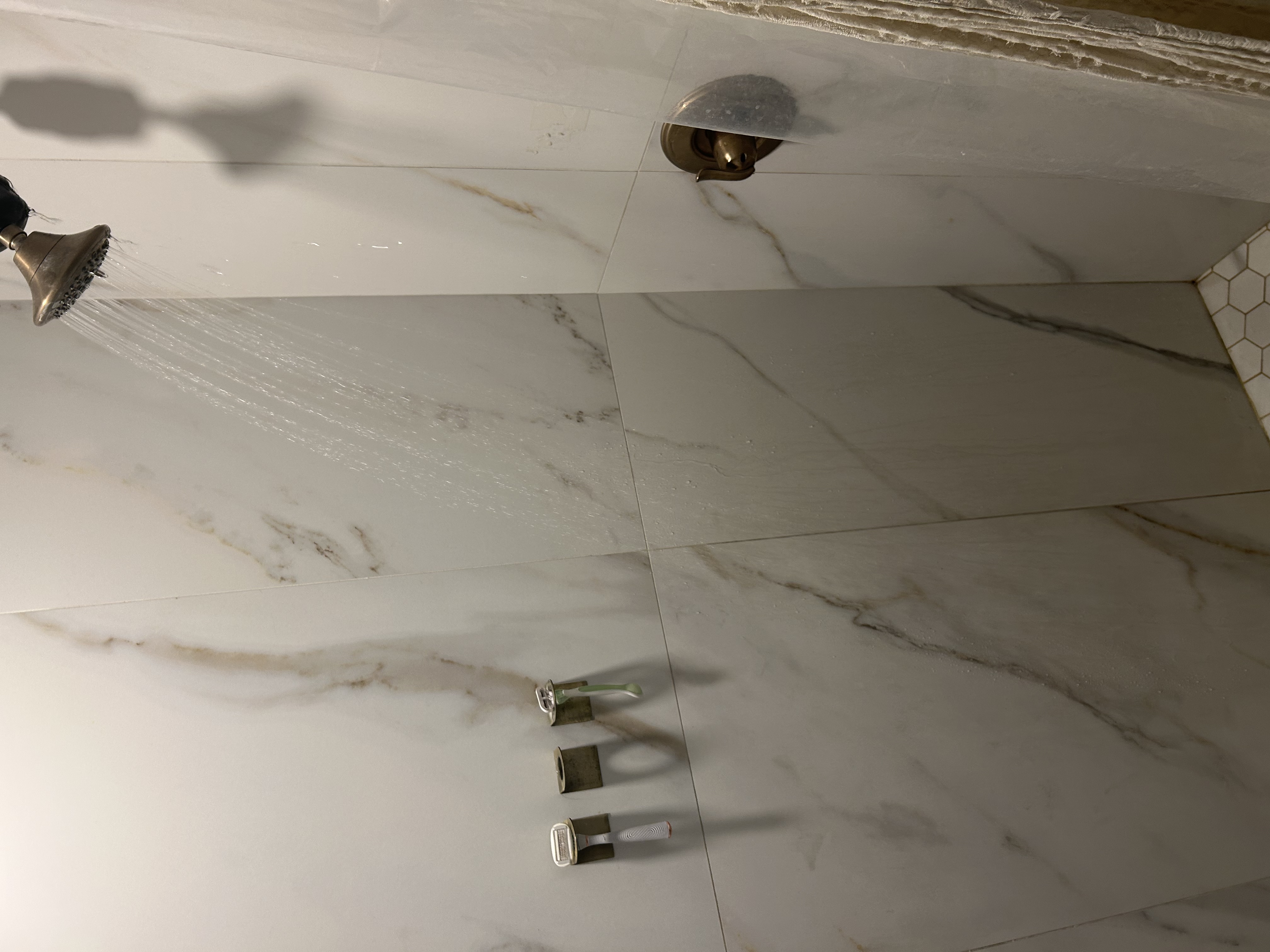
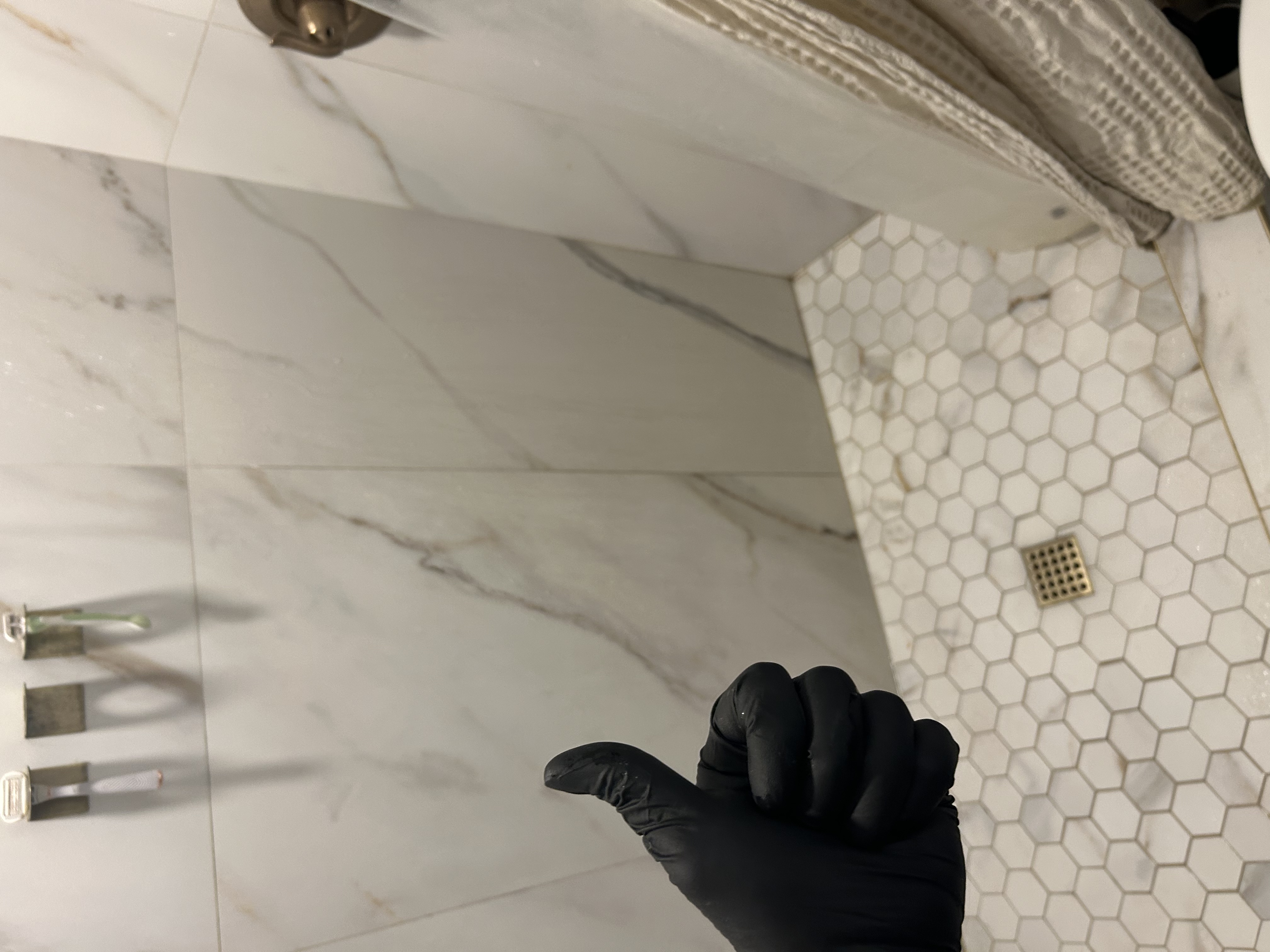
After strainer removal and clearing — shower running freely, flow confirmed before moving to the sink.
Many shower drains have two layers: the visible drain plate or cover, and an interior strainer basket seated inside the drain collar below it. The outer cover is easy to clean. The inner strainer is easy to forget. Over time it corrodes and accumulates debris until flow is severely restricted — but because it's out of sight, homeowners assume the drain line is the problem. In most slow shower drain cases we see, the blockage is at the strainer level, not deeper in the line.
Guest Bath Sink: P-Trap and Pop-Up Assembly Cleared
The guest bath sink was slow as well — running but not draining with any urgency. Matt pulled the P-trap and found the usual combination: a debris and hair accumulation in the trap itself, plus a packed pop-up assembly lift mechanism that had been catching debris at the pivot rod.
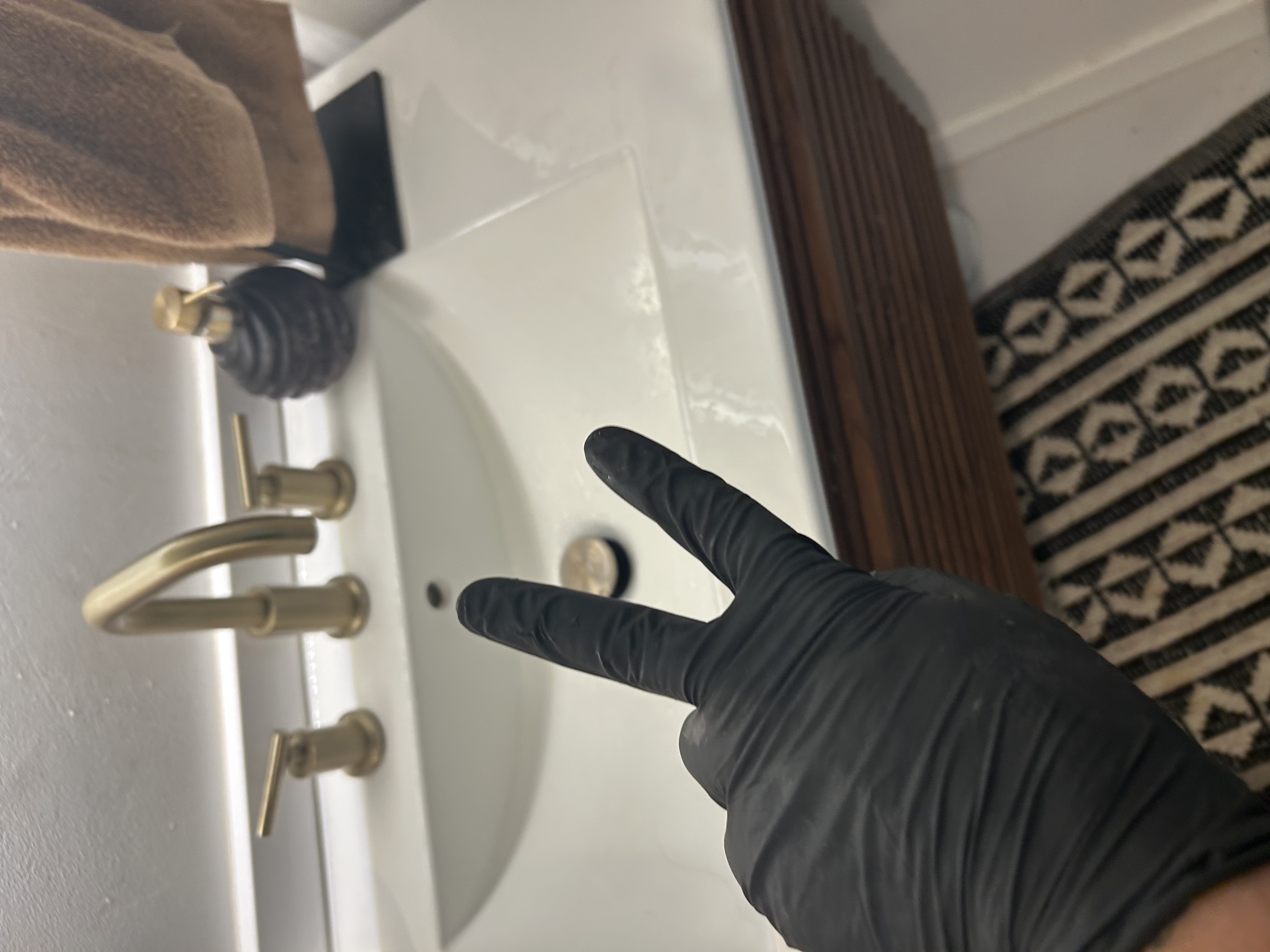
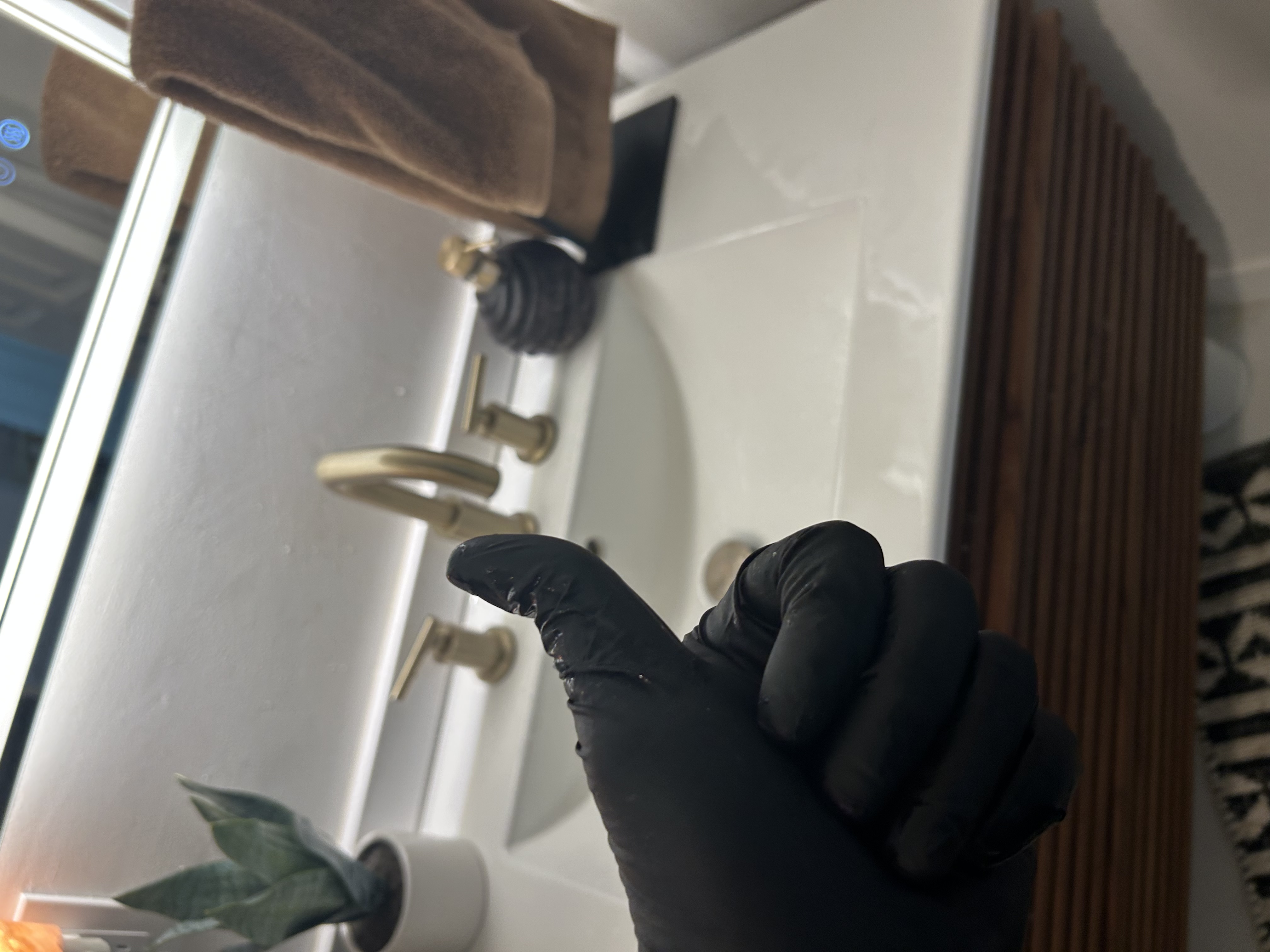
The guest bath sink before service — white porcelain with gold fixtures, slow drain. Matt pointing to the pop-up stopper where the blockage starts.
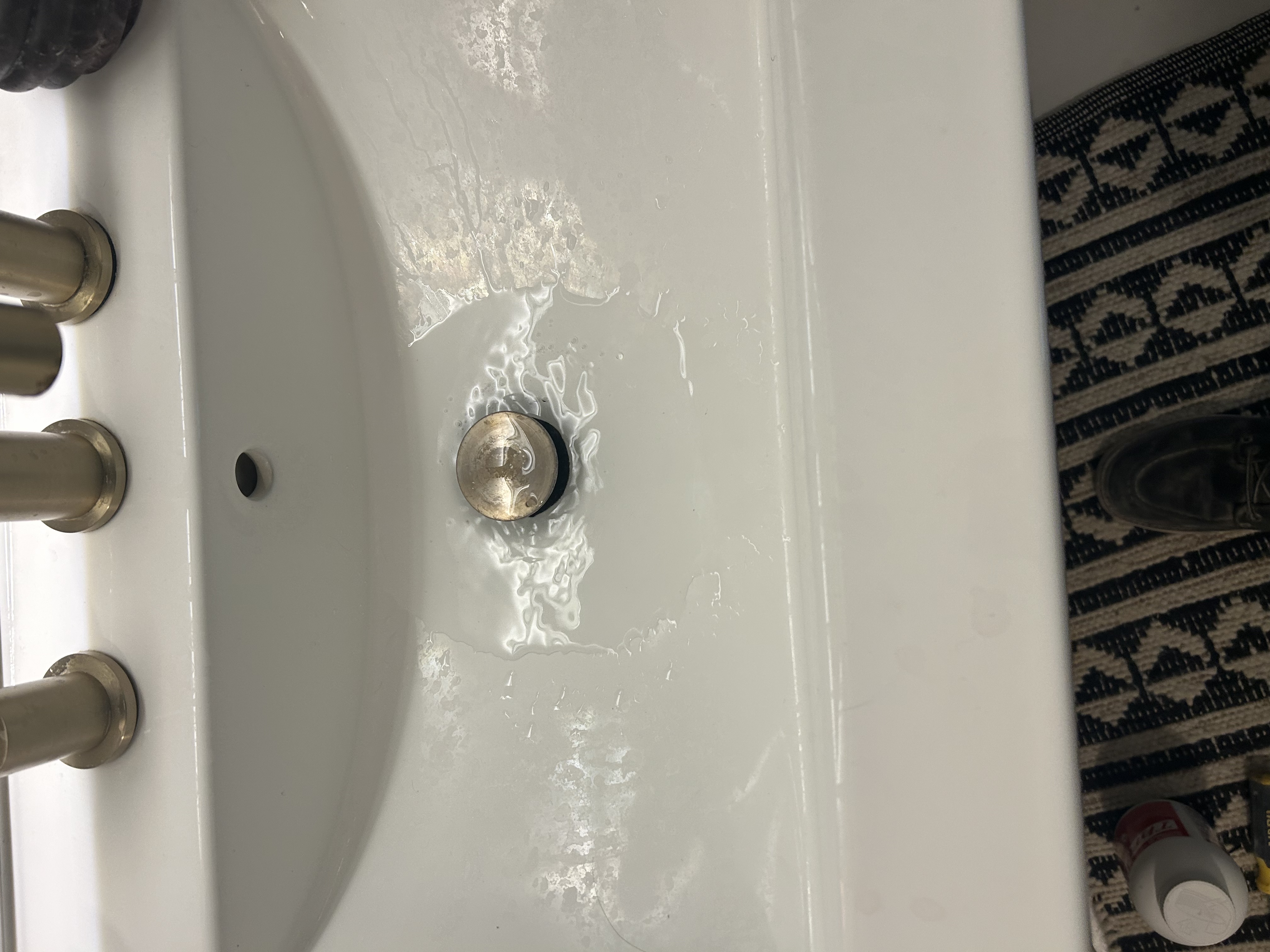
Left: debris removed from the P-trap — hair and soap scum accumulated over the life of the rental. Right: what came out of the pop-up assembly — the pivot rod collects hair where you can't see it from above.
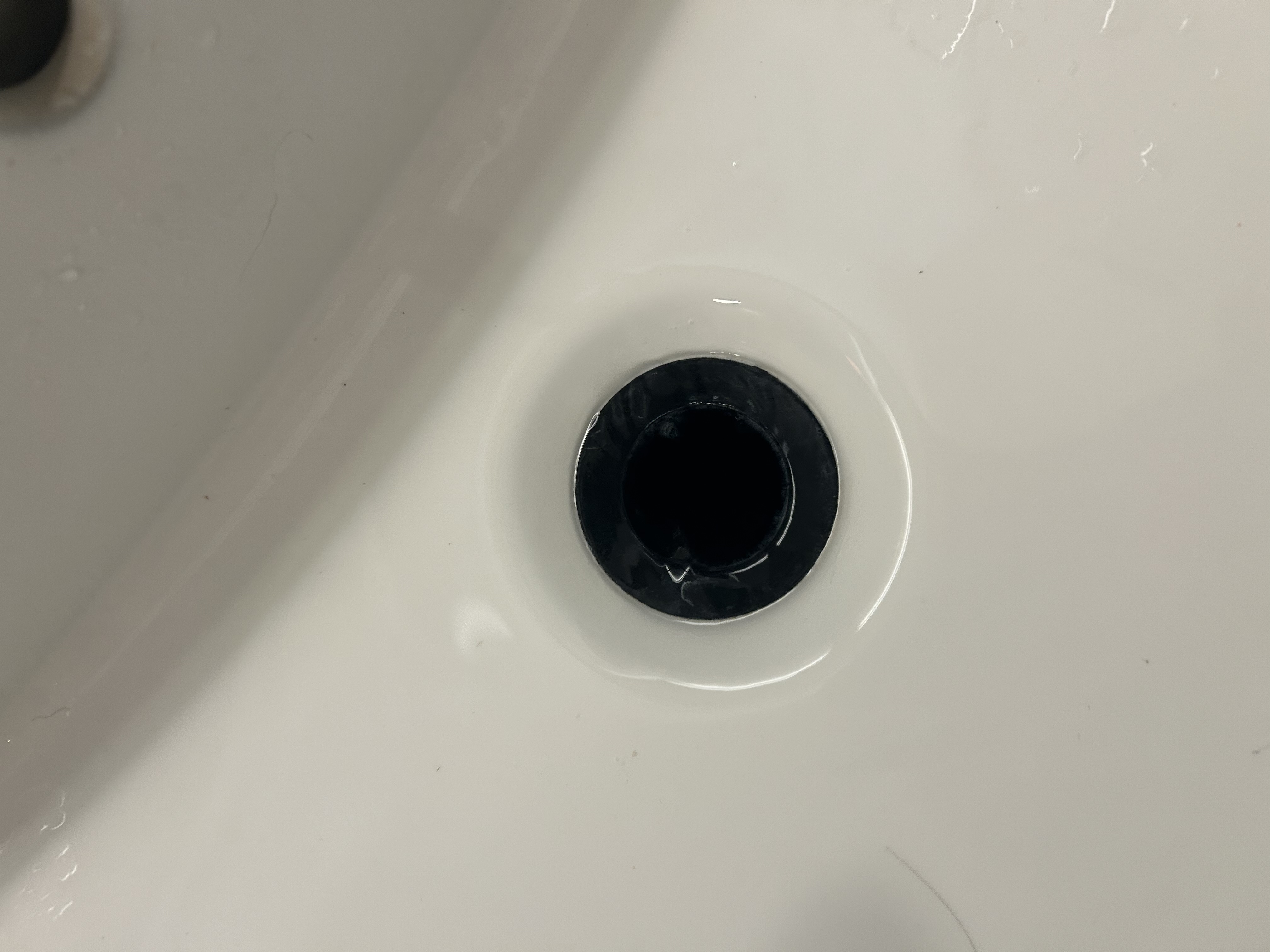
Drain test after clearing — water flowing freely, no backup.
P-trap cleared, pop-up assembly cleaned, everything reassembled and tested. Full flow restored with no parts needed.
The pop-up assembly in a bathroom sink — the lift rod, pivot rod, and stopper mechanism — is one of the most overlooked debris traps in a home. Hair wraps around the pivot rod inside the drain body where you can't see it from above. Soap scum and debris accumulate on the stopper itself. Most slow bathroom sinks aren't a P-trap problem or a line problem — they're a pop-up assembly that hasn't been cleaned in a few years. Disassembling, clearing, and reassembling the mechanism usually restores full flow without any replacement parts.
Two Drains. One Visit. About 35 Minutes.
Both slow drains in the guest bath were cleared at the first visit. No parts needed, no line camera required, no second appointment. The shower strainer and sink pop-up assembly were both maintenance items — the kind of thing that accumulates over the life of a rental property and periodically needs clearing.
On a rental property call like this, the temptation for some techs is to call it a line issue and escalate — which gets the job off the board faster but means a return call, a longer resolution for the property manager, and an unnecessary repair bill. The fix here was straightforward once Matt got eyes on both drains.
Shower strainer clearing plus sink P-trap and pop-up assembly service — both resolved in a single visit with no parts needed. Total job value: $250 at current Phoenix-area rates.
Slow drains are one of the most common tenant complaints in the Phoenix area — and in most cases the fix is a clearing, not a replacement. If your tenant is reporting a slow shower or sink, give us a call. We work with property managers directly and can coordinate access with tenants. Same-day service in Scottsdale.